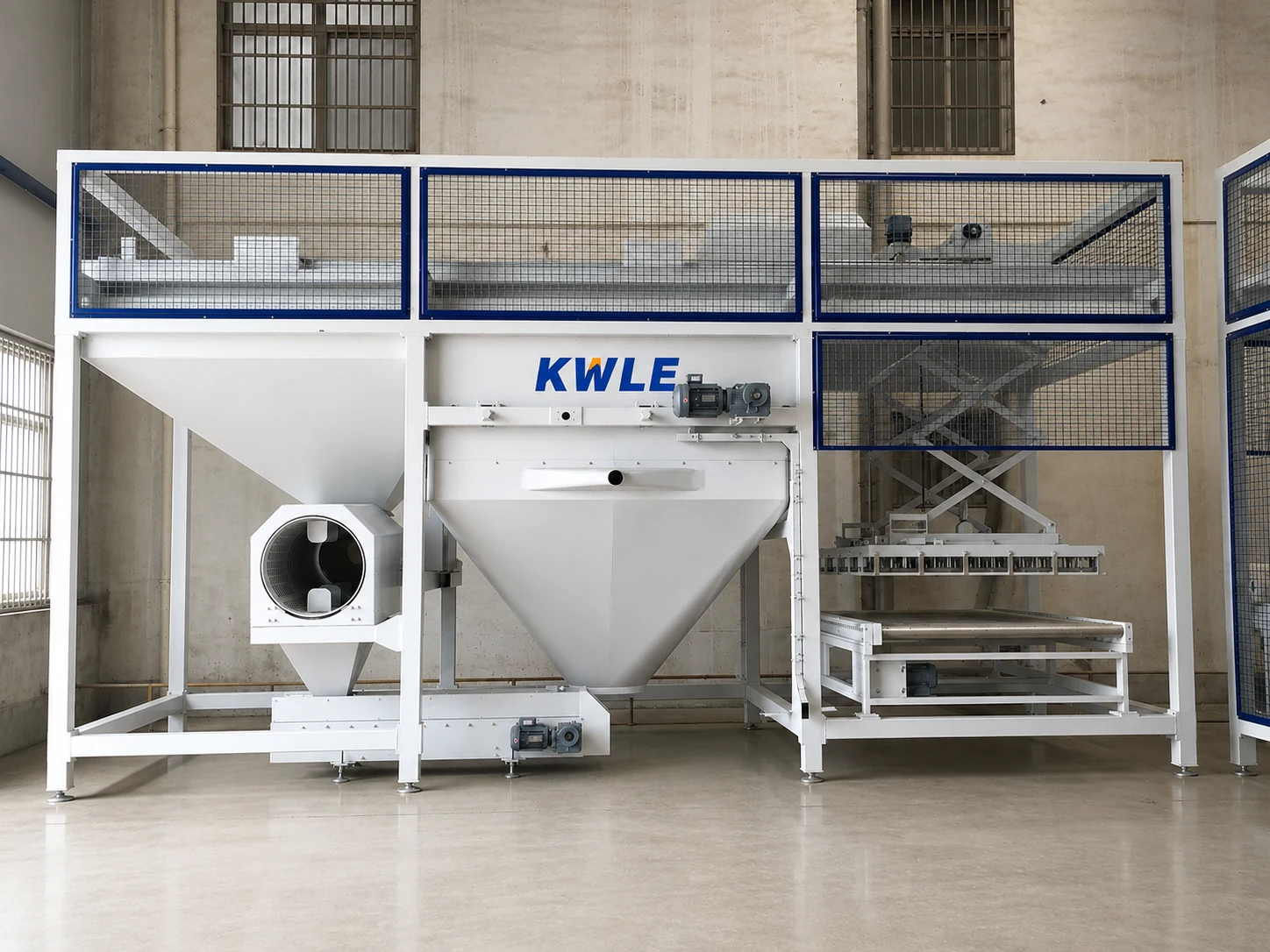
Automatic Layer Bag Emptying

EMP Series Automatic Layer Bag Emptying System

EMP Series is a high-throughput automatic layer bag emptying system for palletized bag layers. Instead of emptying bags one by one, the system empties complete bag layers, discharges material to downstream conveying, storage or processing equipment, collects empty bags, and recovers and stacks empty pallets for continuous operation.

Layer-by-layer emptyingPalletized bagsUp to 120 layers/hourEmpty bag collectionEmpty pallet recovery
PROD-EMP-HERO-01
Product Visual

EMP Product Platforms

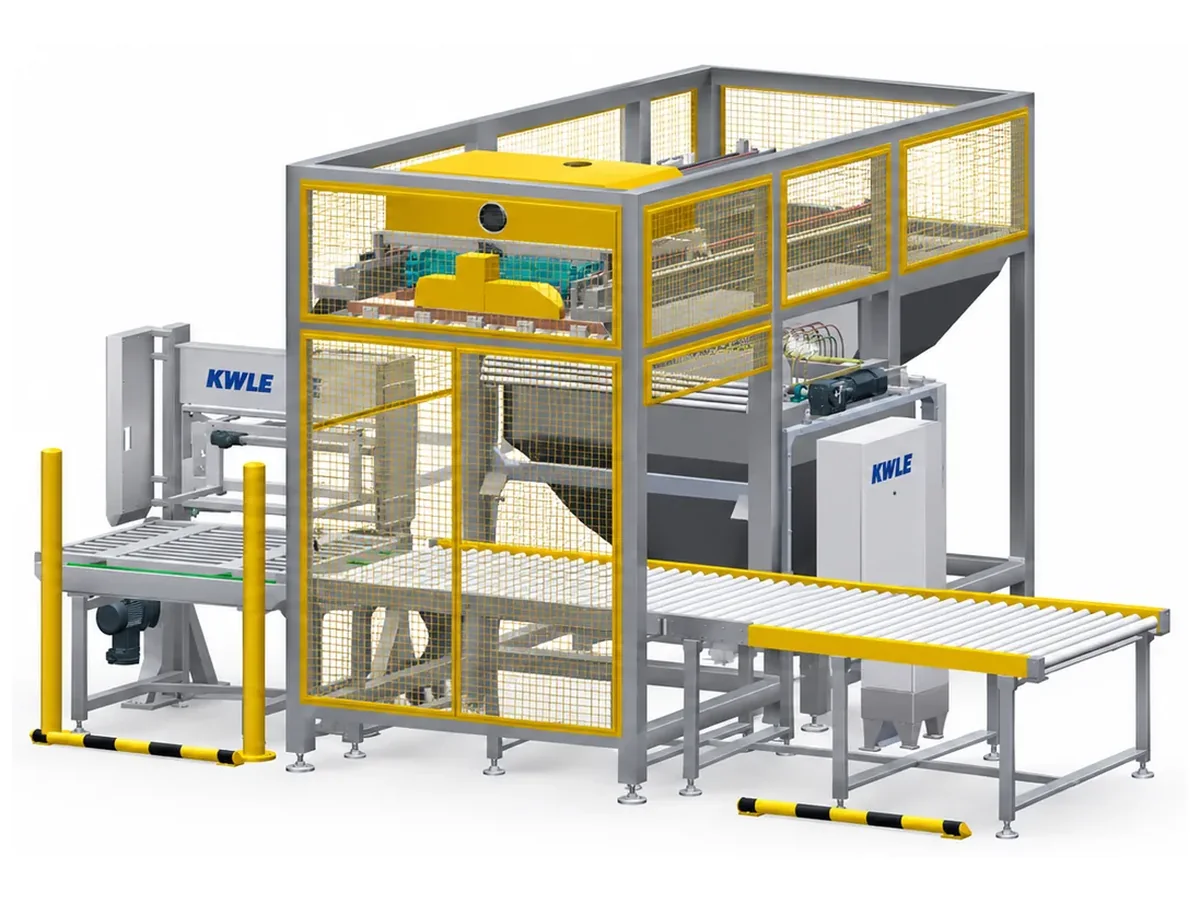
EMP Series can be configured as a standard-throughput or high-throughput layer bag emptying platform according to required line capacity, pallet handling method and site layout. Both platforms are designed for complete-layer bag emptying, material discharge, empty bag collection and empty pallet recovery.

PROD-EMP-S-01
Product Visual

EMP-S

Standard Layer Bag Emptying System

EMP-S uses a gripper lifting arrangement while the pallet remains in position during the bag layer emptying cycle. It is suitable for projects requiring automatic complete-layer bag emptying with standard throughput and a simpler pallet handling motion.

Up to 60 layers/hourGripper liftingComplete layer emptyingEmpty bag collectionEmpty pallet recovery
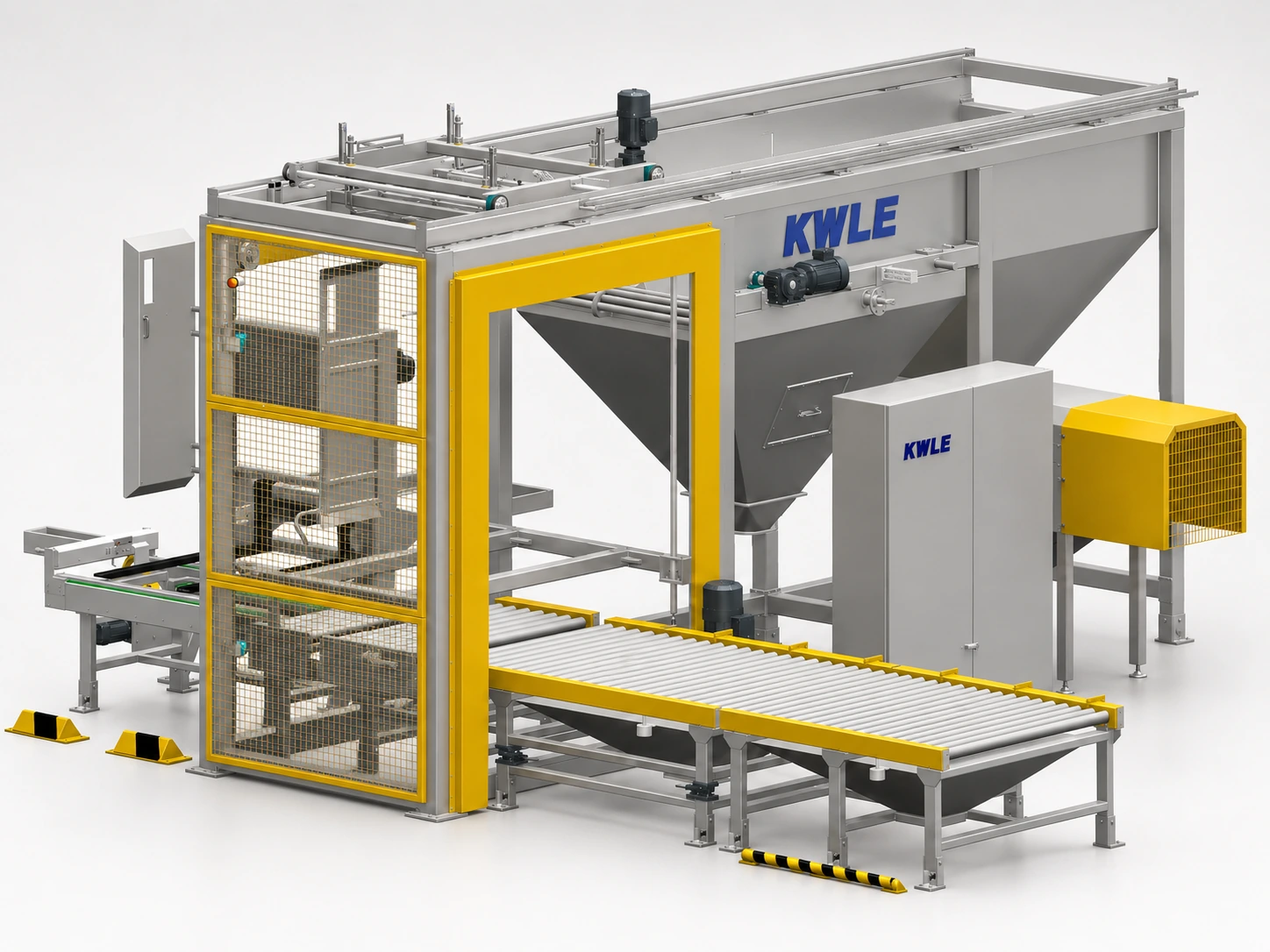
PROD-EMP-H-01
Product Visual

EMP-H

High-Speed Layer Bag Emptying System

EMP-H uses pallet lifting during gripper operation to shorten the emptying cycle and support higher-throughput complete-layer bag emptying. It is selected for production lines requiring faster palletized bag unloading and continuous downstream material feeding.

Up to 120 layers/hourPallet liftingComplete layer emptyingHigh throughputEmpty pallet stacking

How EMP Works

EMP is designed for palletized bag layers rather than one-bag-at-a-time emptying. Palletized bags enter the system, complete bag layers are handled and emptied, material is discharged to downstream conveying or storage equipment, empty bags are collected, and empty pallets are recovered and stacked according to the line layout.

  1. 1

    Palletized bag stack enters the system

  2. 2

    Complete bag layers are handled and emptied

  3. 3

    Material is discharged to downstream equipment

  4. 4

    Empty bags are collected

  5. 5

    Empty pallets are recovered and stacked

High-Throughput Capacity

EMP-H can reach up to 120 layers/hour. Based on 5 bags per layer and 50 kg per bag, this is equivalent to up to 30 t/hour under suitable project conditions. EMP-S can reach up to 60 layers/hour for standard-throughput applications. Final capacity depends on bag size, pallet pattern, material behavior, emptying stability and downstream conveying capacity.

Suitable Bag Types / Materials

EMP systems can be configured for palletized industrial bags such as woven PP bags, PE bags, paper bags and laminated bags. Final suitability depends on bag material, bag size, layer pattern, pallet stability and material discharge behavior.

Woven PP bagsPE bagsPaper bagsLaminated bagsPalletized industrial bags

Typical Materials

Plastic PelletsGranulesCoarse PowdersFertilizerAnimal FeedFood AdditivesFeed AdditivesMixed Bagged Materials

Fine powder or highly dust-prone applications should be evaluated according to dust level, bag material, emptying behavior and downstream dust collection requirements.

Key Features

Complete layer bag emptying

Designed to empty complete palletized bag layers instead of processing bags one by one, supporting high-throughput raw material unloading.

High-throughput palletized bag handling

EMP-S and EMP-H provide different throughput platforms according to required line capacity and pallet handling motion.

Material discharge to downstream equipment

Emptied material can be discharged to downstream conveying, storage, hopper or processing equipment according to project requirements.

Empty bag collection

Empty bags are collected after layer emptying to reduce manual handling and support cleaner downstream operation.

Empty pallet recovery and stacking

Empty pallets are recovered and stacked according to the line layout to support continuous operation and reduce manual pallet handling.

Project-specific line layout

System layout, guarding, empty bag handling, pallet handling and downstream interfaces are configured according to site conditions and process requirements.

Optional Configurations

  • Dust collection connection
  • Empty bag collection / compaction
  • Empty pallet handling layout
  • Conveyor connection
  • Silo / hopper feeding interface
  • Safety guarding
  • Full stainless steel construction

Technical Specifications

Emptying method
Complete layer bag emptying
Capacity, EMP-S
Up to 60 layers/hour
Capacity, EMP-H
Up to 120 layers/hour
Reference throughput
Up to 30 t/hour based on 5 bags/layer and 50 kg/bag
Bag type
Woven PP, PE, paper and laminated industrial bags
Bag weight
Project-specific
Pallet pattern
Project-specific
Material types
Plastic pellets, granules, coarse powders and selected mixed bagged materials
Material discharge
To downstream conveying, storage or processing equipment
Empty bag handling
Empty bag collection
Empty pallet handling
Empty pallet recovery and stacking
Power supply
380/400V, 3PH, 50Hz (other voltages available)
Air supply
5.5–6 bar compressed air
Control system
PLC-based control system with operator interface

Line Integration

EMP systems can be integrated with downstream conveying, storage silos, hoppers, processing equipment, dust collection systems and plant material handling lines. The final system layout depends on pallet pattern, bag material, material behavior, required capacity, empty bag handling, empty pallet recovery and available plant space.

Engineering Selection Notes

EMP system selection depends on bag material, bag size, pallet pattern, layer stability, material flow behavior, dust level, required layer capacity, downstream conveying capacity, empty bag handling, empty pallet recovery and site layout. KWLE engineers evaluate these factors to select the proper EMP-S or EMP-H platform and project-specific configuration.