Material Characteristics
Flowability, bulk density, particle size, dust generation and aeration behavior.

KWLE Services
KWLE supports industrial bagging projects from application evaluation and engineering through manufacturing, factory testing, delivery, commissioning and long-term technical support.
Each project is developed around the material, bag specification, required capacity, production process, site conditions and customer requirements.
Application & Line Engineering
KWLE develops project-specific packaging solutions based on actual production requirements. Equipment selection and line configuration begin with understanding the material, bag, required capacity, closing method, plant layout and upstream and downstream processes.
For complete packaging lines, individual machines and auxiliary equipment are coordinated as one system, including weighing, feeding, filling, bag closing, conveying and related downstream handling.
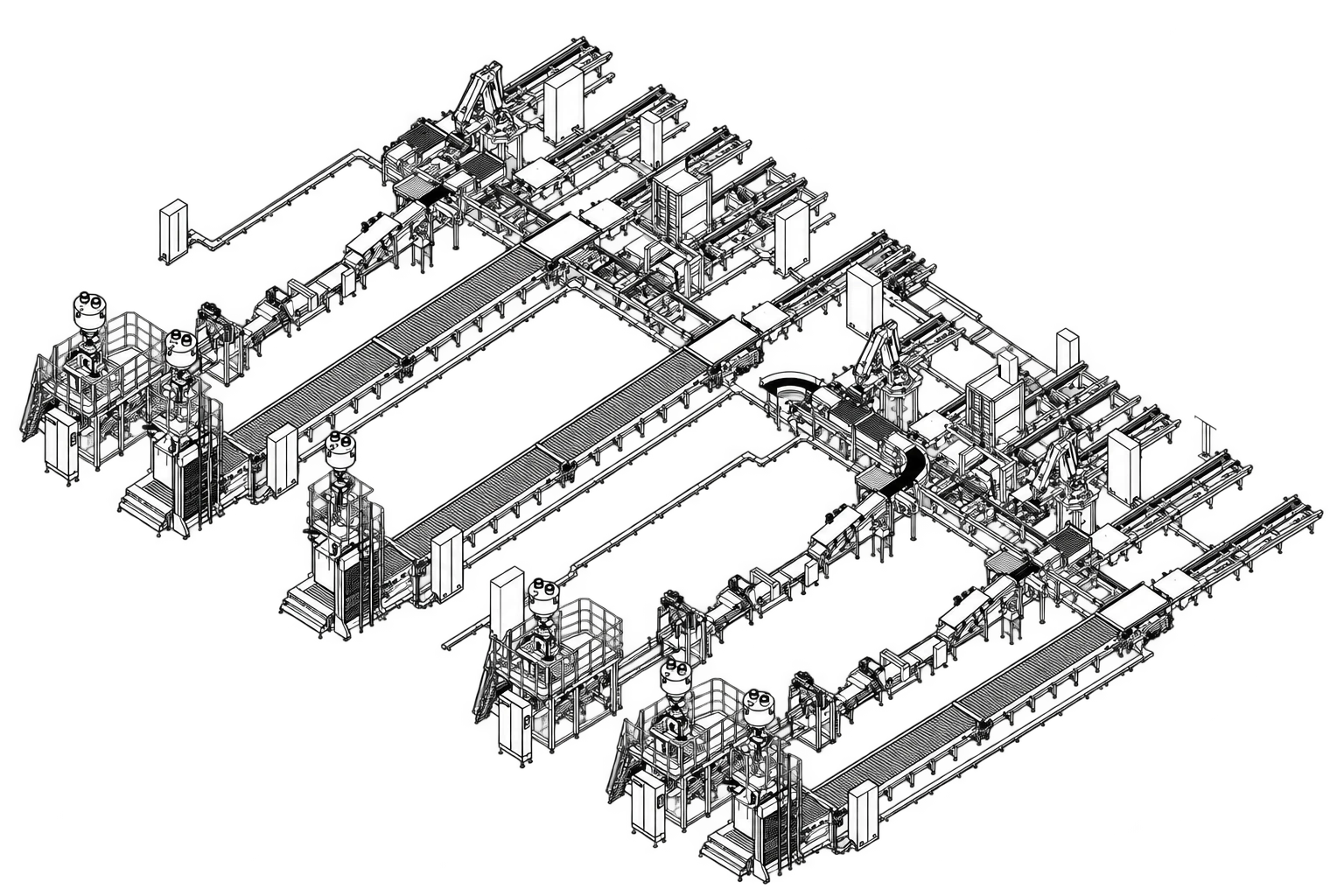
Flowability, bulk density, particle size, dust generation and aeration behavior.
Bag type, dimensions, bag weight and closing method.
Required bags per hour and operating conditions.
Available space, equipment height and access requirements.
Connections with upstream feeding and downstream equipment.
Line coordination, signals and control requirements.
Project Execution
Once the application requirements are understood, the project moves through engineering, manufacturing, testing and delivery according to the confirmed technical scope.
Confirm material, bag, capacity, process, site conditions and project requirements.
Confirm equipment configuration, layout, mechanical and electrical interfaces, and technical documentation.
Manufacture, assemble and integrate the equipment according to the confirmed project specification.
Carry out functional testing and agreed project-specific acceptance checks before shipment.
Prepare documentation and shipment, then support installation, startup, adjustment and commissioning according to project scope.
Support operator training, HMI use, parameter adjustment and routine maintenance instruction where required.
Factory Testing
Packaging equipment is assembled and functionally tested before shipment. Testing is carried out according to the equipment configuration and agreed project requirements.
Depending on the project scope, testing may include equipment sequence checks, safety and interlock verification, weighing and filling functions, bag handling, closing equipment interfaces and complete-line coordination.
Project-specific FAT requirements can be agreed during technical confirmation. Customer participation in FAT can be arranged when required.
Future photo — Factory testing / FAT
Startup Support
After equipment delivery, KWLE supports installation and commissioning according to the agreed project scope and site requirements.
Equipment positioning, mechanical installation and connection checks.
Startup, weighing calibration, parameter setting and functional adjustment.
Adjustment of bag handling, closing and downstream equipment interfaces.
Line testing and adjustment using customer materials where applicable.
HMI operation, parameter adjustment, alarm handling and normal operating procedures.
Routine inspection, maintenance points and basic troubleshooting guidance.
Installation, commissioning and training arrangements are defined according to project scope and site requirements.
Future photo — Installation, commissioning and operator training
After-Sales Support
After commissioning and handover, KWLE continues to support equipment operation, troubleshooting, maintenance and spare parts requirements.
Technical support using equipment alarms, HMI information, operating parameters, photos, videos and other available operating information.
Recommended spare parts lists, wear parts, replacement component identification and parts supply.
Assistance with mechanical, electrical, control and operating issues related to the supplied equipment.
On-site technical assistance, equipment adjustment, upgrade or modification support can be arranged according to project requirements.
KWLE uses internationally established industrial components with global support and availability to help customers maintain their equipment and source replacement parts throughout the equipment lifecycle.
Project Schedule
Project lead time depends on equipment configuration, customization requirements, purchased components, testing requirements and overall project scope.
A project-specific schedule is provided after the technical requirements and supply scope are confirmed.
The main information includes material characteristics, bag type and dimensions, bag weight, required capacity, closing method, available plant space, upstream and downstream processes, and other project-specific requirements.
Yes. Material characteristics are an important part of equipment selection. Information such as flowability, bulk density, particle size, dust generation and aeration behavior is considered when selecting the filling and feeding configuration.
Yes. Equipment can be engineered around existing upstream and downstream processes, available plant space, mechanical interfaces and control requirements.
Testing depends on the equipment configuration and agreed project requirements. It may include functional sequence testing, safety and interlock checks, weighing and filling functions, bag handling and complete-line coordination.
Yes. Customer participation in FAT can be arranged when required and agreed as part of the project.
Installation and commissioning arrangements are defined according to the project scope and site requirements. Support may include installation guidance, startup, calibration, parameter setting, equipment adjustment and production testing.
KWLE provides remote troubleshooting, technical support, spare parts support and on-site technical assistance where required.
KWLE can provide recommended spare parts lists, wear parts and replacement components for the supplied equipment. Parts requirements can be identified using equipment documentation and component information.
Tell us your material, bag type, bag weight, required capacity and current project conditions. Our engineering team can use this information to evaluate the packaging configuration and appropriate next step.