Bottom-up filling
Fills powder from the lower part of the bag upward to help reduce product free fall, dust escape and air entrapment.
KBF Series
KBF Series systems are designed for fine, ultrafine, sticky and dust-prone powder materials that require controlled filling, product deaeration and cleaner bagging conditions. The bottom-up filling method helps reduce product free fall, dust escape and air entrapment during bagging.
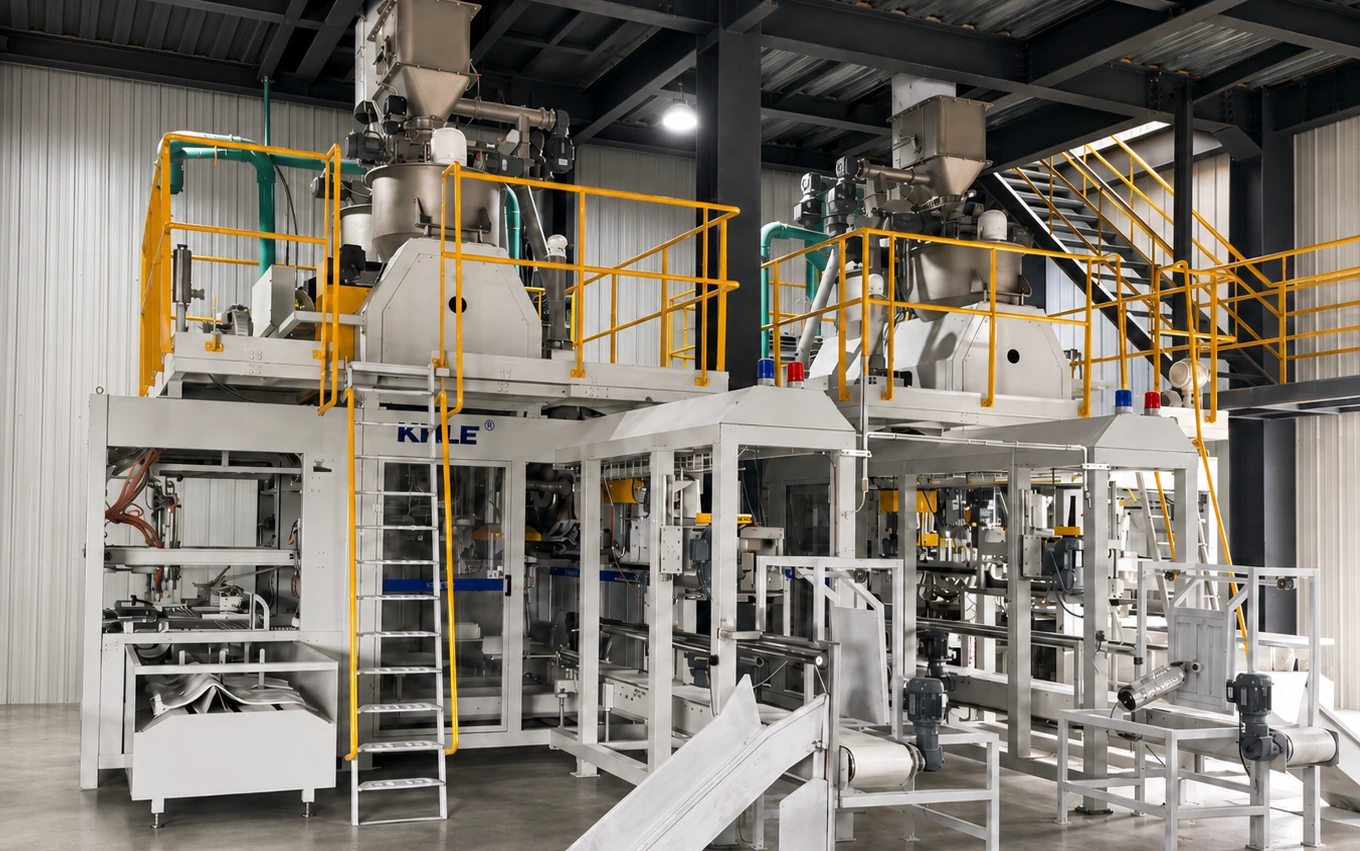
KBF systems fill powder materials from the lower part of the bag upward, helping reduce free fall, dust escape and air entrapment during filling. The filling spout, bag holding area, weighing and feeding system, deaeration arrangement and dust collection connection are configured according to material flowability, bulk density, air content, dust level and bag specification.
The feeding process follows a controlled feeding curve, smoothly transitioning from high-rate feeding to fine dosing as the target weight is approached. This helps balance filling speed, weighing accuracy and stable powder flow.
Select a KBF model according to target output, powder characteristics, bag specification, transfer layout and complete line configuration.
Both KBF-1025 and KBF-1030 are single-head bottom-up filling systems. The difference is the bag transfer layout. KBF-1025 uses side-transfer bag discharge, while KBF-1030 uses forward-transfer bag discharge for shorter transfer cycle time and higher single-head output. KBF-2060 is a dual-head bottom-up filling system for higher-output powder bagging lines while maintaining controlled filling and dust containment.
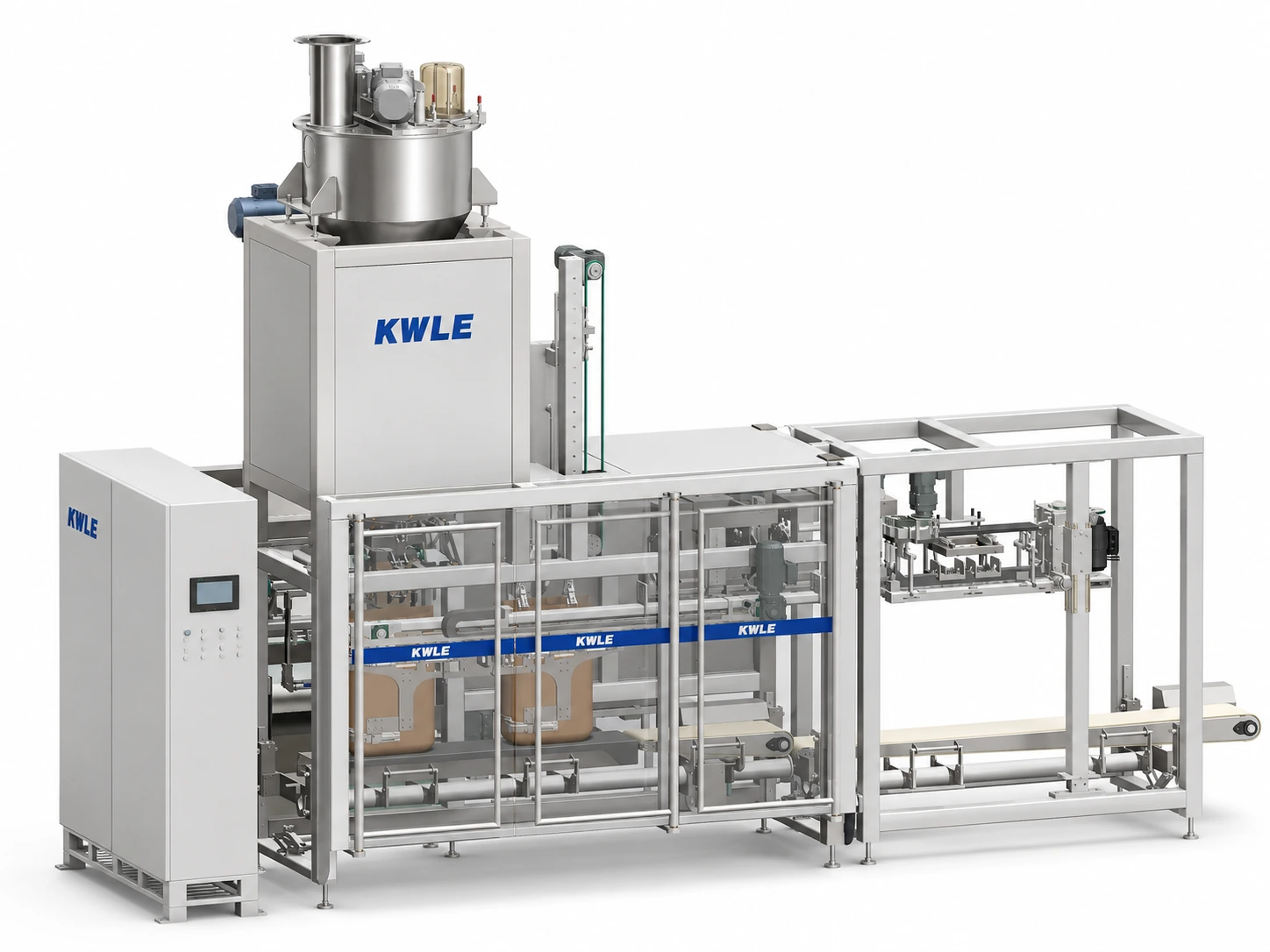
Single-head bottom-up powder filling system with side-transfer bag discharge.
Application examples
Configuration notes
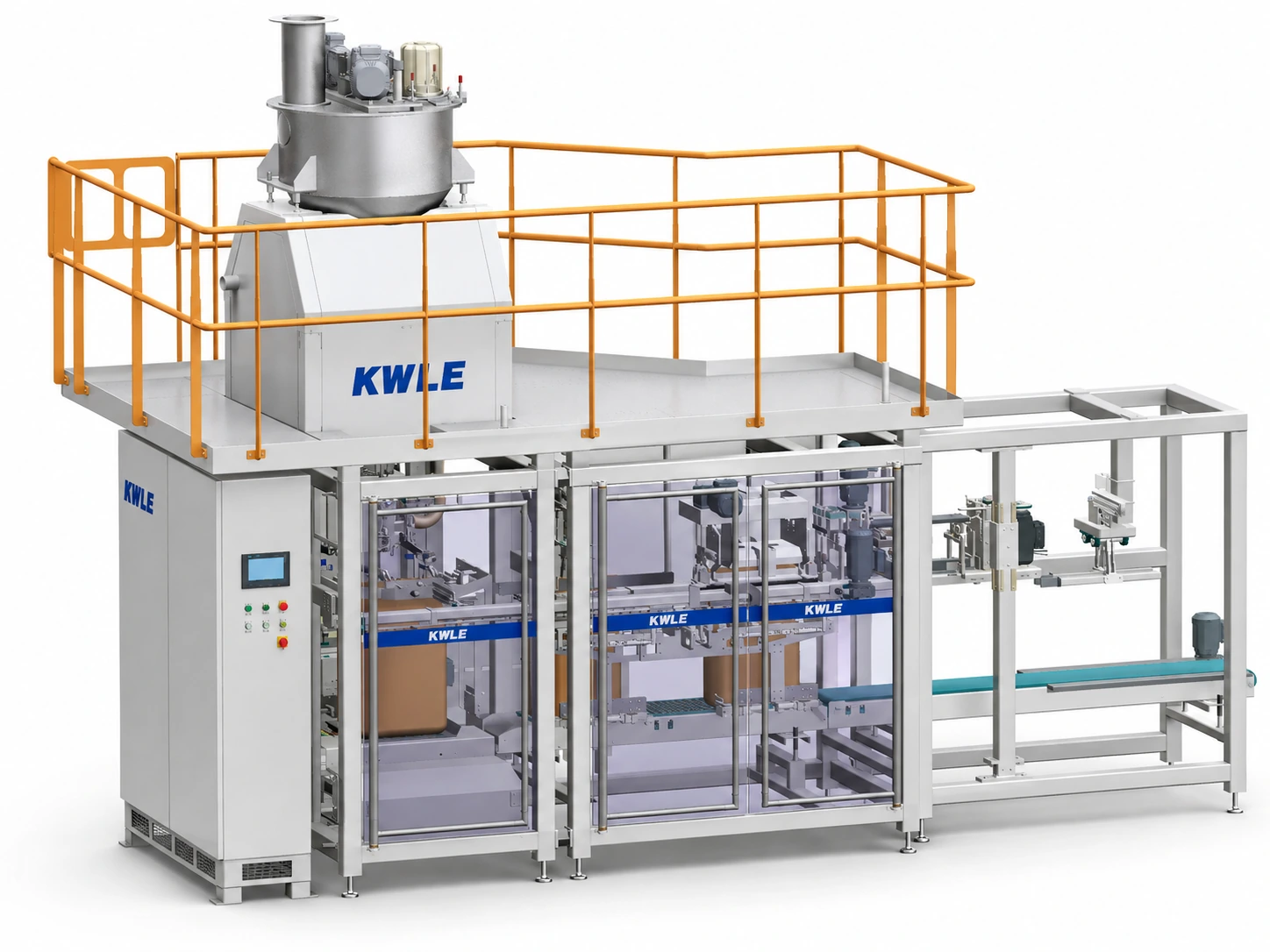
Single-head bottom-up powder filling system with forward-transfer bag discharge for shorter transfer cycle time.
Application examples
Configuration notes
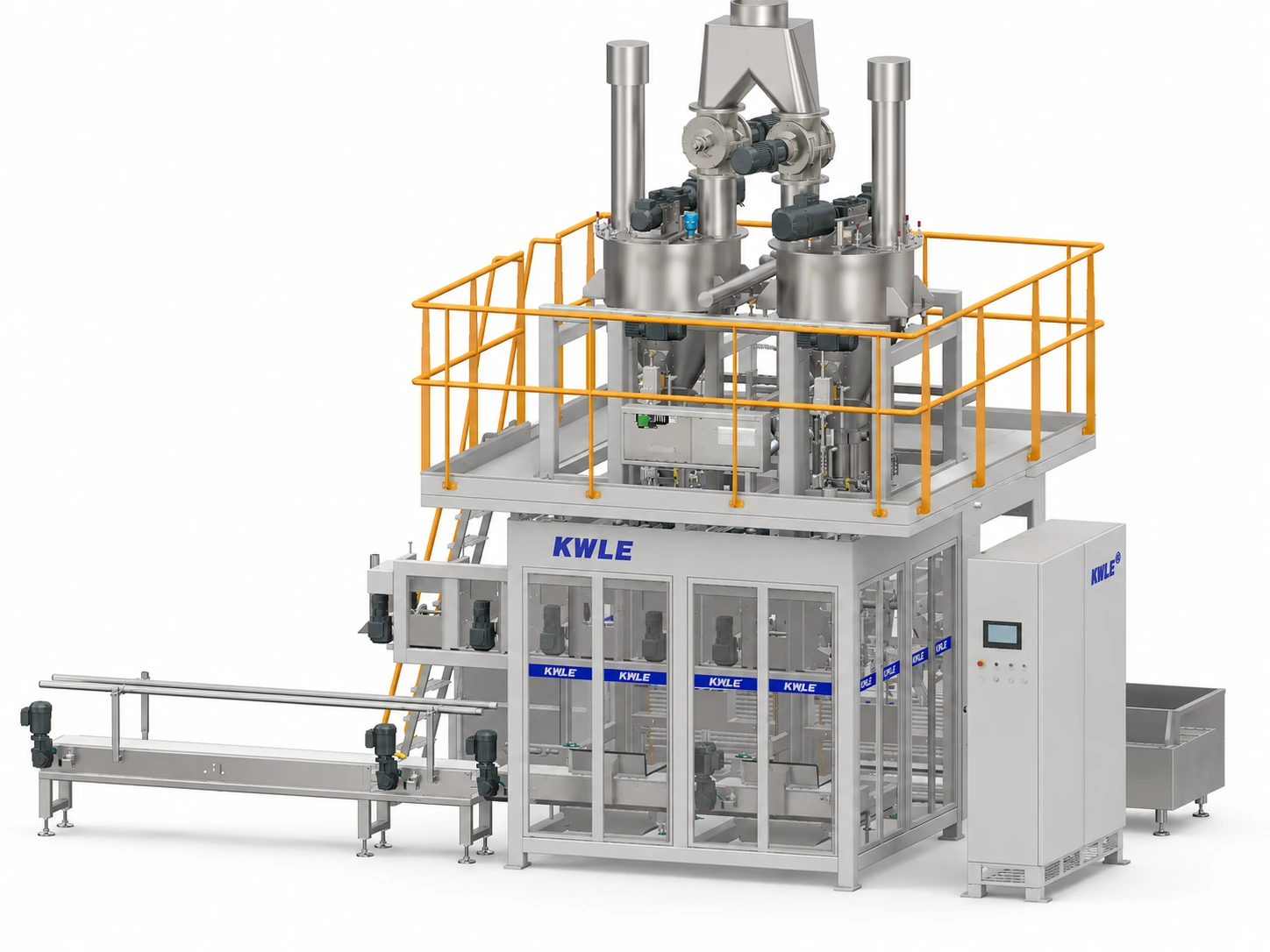
Dual-head bottom-up powder filling system for higher-output powder bagging lines while maintaining controlled filling and dust containment.
Application examples
Configuration notes
Fills powder from the lower part of the bag upward to help reduce product free fall, dust escape and air entrapment.
The filling spout, bag holding area and dust collection connection can be configured to help reduce dust leakage around the bag mouth.
Product deaeration and bag-mouth air release can help reduce entrained air, improve bag shape and support downstream conveying and palletizing.
The feeding process follows a controlled feeding curve, smoothly transitioning from high-rate feeding to fine dosing as the target weight is approached.
Filling spout design can be configured according to powder characteristics, bag type and dust control requirements.
PLC-based control and access-friendly structure support operation, inspection, cleaning and routine service work.
KBF systems can be integrated into complete powder bagging lines with conveying, bag closing, check weighing, metal detection, palletizing and pallet load covering equipment when required. These downstream modules are selected according to project layout, product requirements and automation level.
KBF configuration depends on powder flowability, bulk density, air content, stickiness, dust level, target bag weight, bag material, bag dimensions, filling speed, deaeration requirements and plant layout. KWLE engineers evaluate these factors to select the filling spout, feeding method, deaeration arrangement, dust collection connection and complete line configuration.