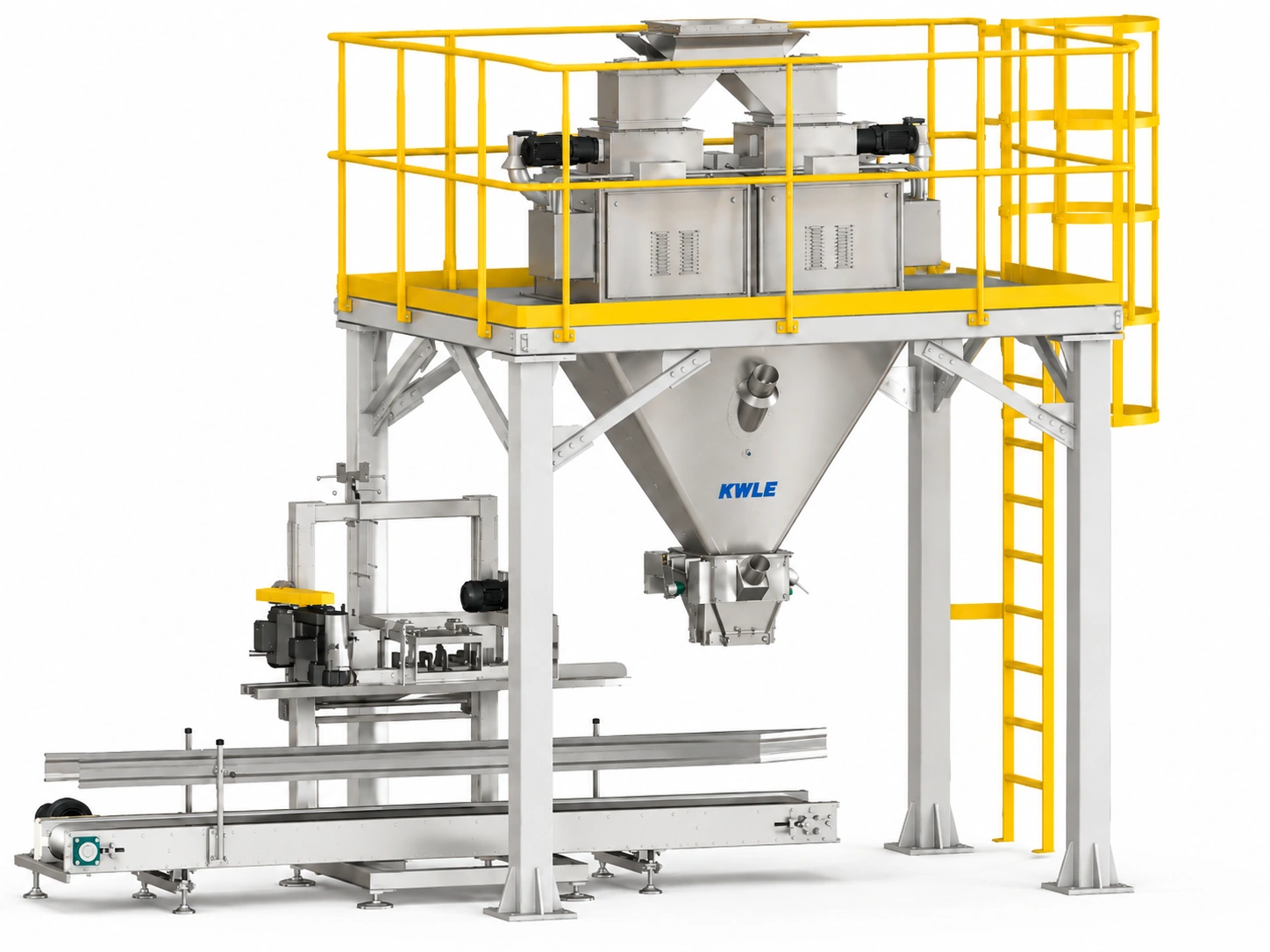
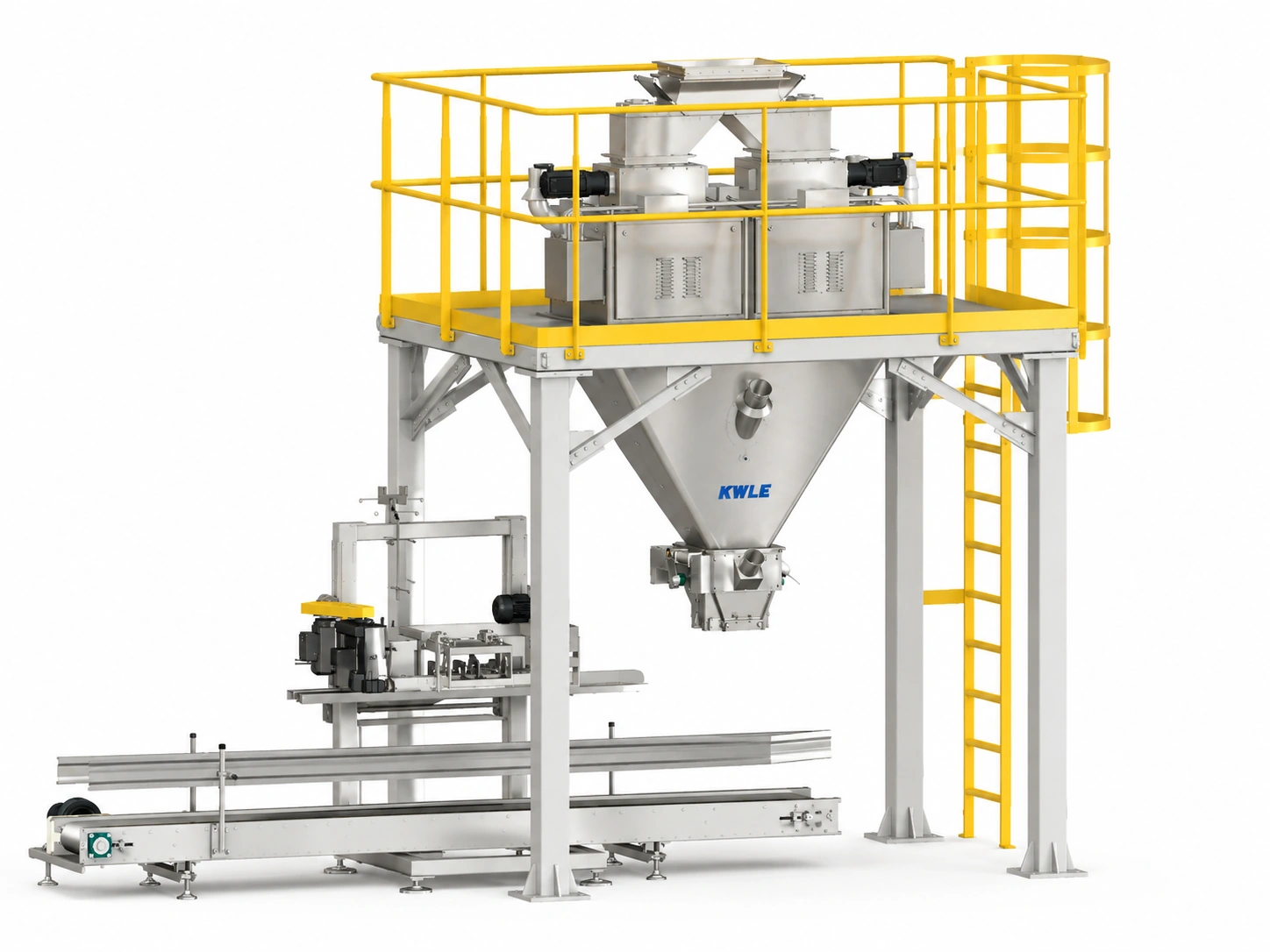
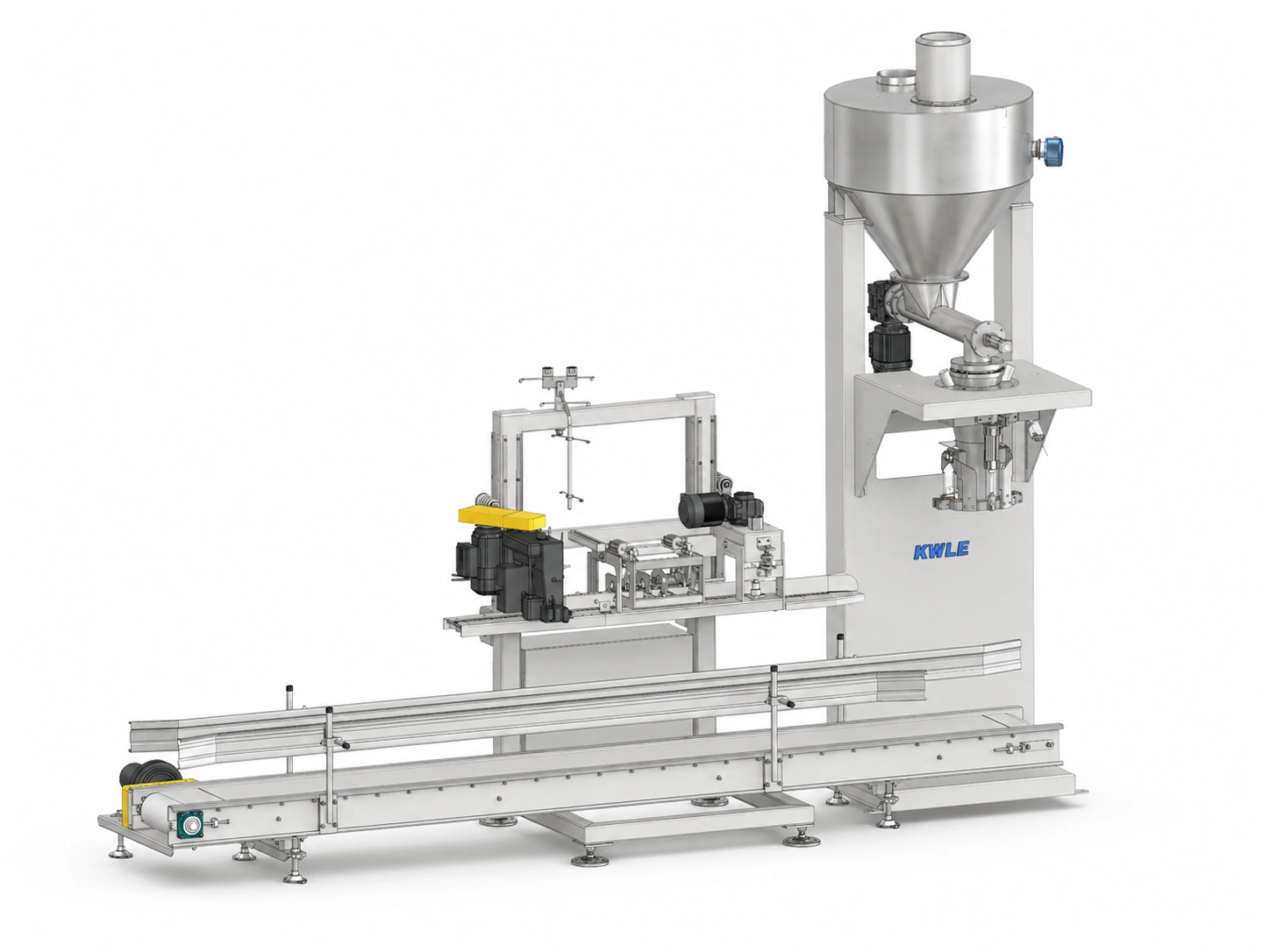
Manual Bagging Stations are manual and semi-automatic bagging stations for open-mouth bagging projects where flexible operation, lower initial investment and future automation upgrade paths are important. Operators place empty bags manually, while weighing, filling and downstream handling can be configured according to material characteristics and project requirements.
Manual bag placingSemi-automaticFlexible configurationPhased automation
Manual Bagging Process Overview
Manual bagging stations combine operator bag placing with controlled weighing and filling. The operator places an empty open-mouth bag on the filling spout, the system controls weighing and filling, and the filled bag can then be released to closing, conveying or downstream handling equipment according to the line configuration.
Manual Bagging Station Types
Manual bagging stations can be configured with net weighing or gross weighing according to material characteristics, weighing requirements, site layout and project budget.
Net Weighing Manual Bagging Station
Pre-weighs the material in a weighing hopper before discharging it into the manually placed bag. This configuration is suitable when weighing accuracy, repeatability and smoother operating rhythm are important, especially for free-flowing granules, pellets, powders and additive products.
Net weighingPre-weighed dischargeBetter operating rhythmFree-flowing materialsUpgrade-ready
Weighs the bag while material is filled directly into it. This configuration is suitable for straightforward manual bagging operations, shorter material paths, and products that may not discharge smoothly from a separate weighing hopper.
Gross weighingDirect fillingShorter material pathSticky / poor-flowing materialsSimple station layout
Operators place empty bags manually on the filling spout, allowing flexible handling of different bag sizes and production conditions.
Semi-automatic weighing and filling
Weighing and filling can be controlled by the system to support consistent bag weight and repeatable filling operation.
Flexible material and bag handling
The station can be configured according to material flowability, bag specification, closing method and site layout.
Lower initial investment
Provides an industrial bagging solution for projects that do not require fully automatic bag placing at the initial stage.
Easy operation and maintenance
PLC-based control and access-friendly structure support daily operation, inspection and routine service work.
Upgrade-ready configuration
The station can be planned with interfaces for conveying, bag closing, coding, check weighing or future automation upgrades when required.
Optional Configurations
Optional modules can be selected according to project requirements and line layout.
Sewing / heat sealing systemCoding / printing interfaceDust collection connectionFull stainless steel constructionConveyor connectionCheck weighing interfaceQuick adjustment for bag sizes
Technical Specifications
Bag weight range
10–50 kg
Bag types
Gusseted, gusseted flat bottom, and pillow bags
Bag materials
Paper, PE, and woven PP bags
Weighing and filling configuration
Net weighing or gross weighing, selected according to material characteristics and project requirements
Bag dimensions
Bag length: xxxx mm; Bag width: xxxx mm
Power supply
380/400V, 3PH, 50Hz (other voltages available)
Air supply
5.5–6 bar compressed air
Typical footprint
Length xxxx mm × depth xxxx mm
Control system
PLC-based control system with operator interface
Line Integration
Manual bagging stations can be connected with bag closing, conveying, coding, check weighing and other downstream equipment when required. The final line configuration depends on material characteristics, bag specification, target output, site layout and future automation plans.
Engineering Selection Notes
Manual Bagging Stations configuration depends on material flowability, bulk density, dust level, target bag weight, bag material, bag dimensions, closing method, available labor, site layout and future automation plan. KWLE engineers can configure weighing, filling, closing, conveying and upgrade-ready line interfaces according to project requirements.